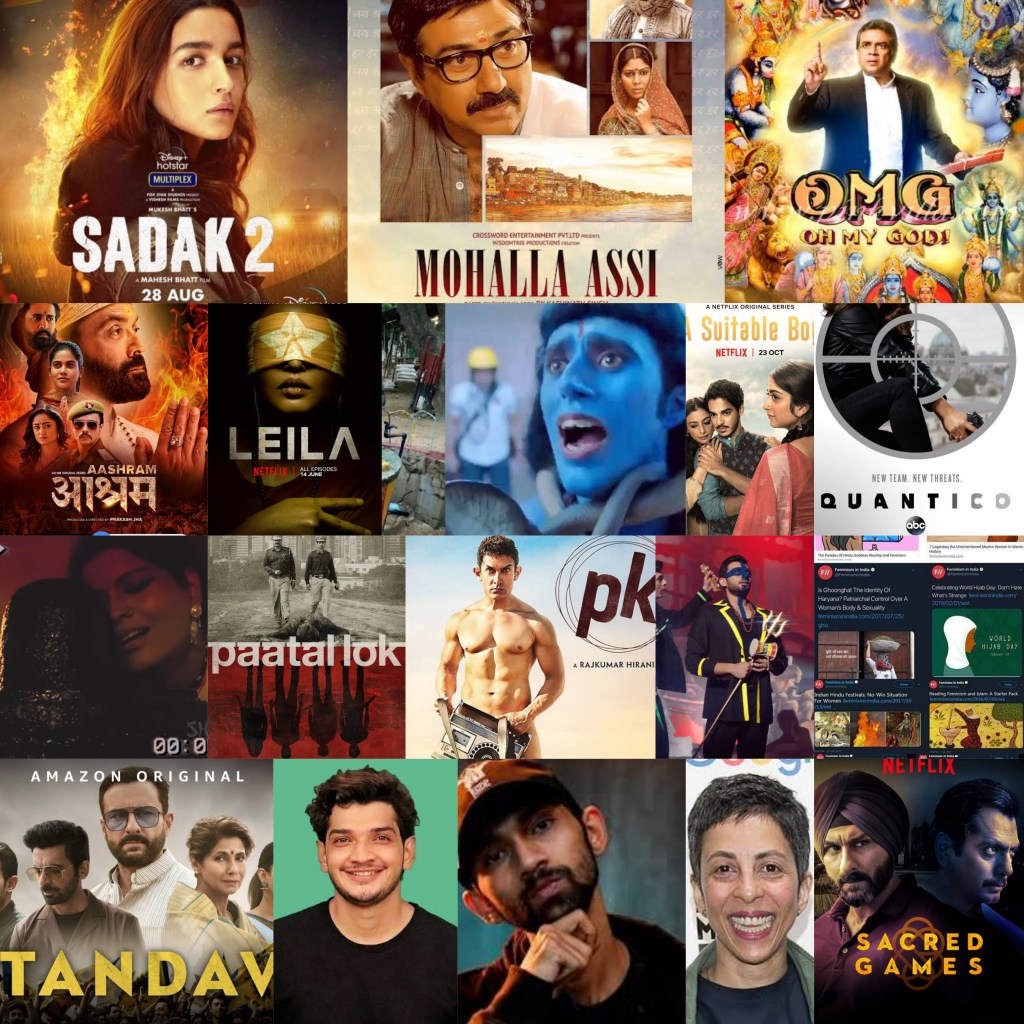
We all know about the pleasures, distractions and entertainment that pop culture offers us. The movies which we watch, the celebrities whose fashion we follow, the ads whose stories makes us smile, all of these make a pop culture today. Pop culture is seen in day-to-day life and we spend a good amount of time and money on it.
Cinema is said to be a reflection of one’s own society, unfortunately bollywood has only continued what’s being going on for centuries. Bollywood movies has become an example of the resilience of the colonial stereotypes — the cunning and spineless pandit; the idiot brahmachari; the ‘oriental despot’ Thakur; the greedy Baniya with no morals; a weak, effeminate Hindu’s dissatisfied wife desperate for a ‘real’ man.
My generation that uses Bollywood as a primary source of entertainment is now developing an attitude which is non-Indian.
The research has shown that the negative image is being made in films on the basis of caste and religion. Many controversies and criticisms have been levelled at Aamir Khan’s ‘PK’ film for defaming Hindu sentiments. Then in Bajrangi Bhaijaan movie, India is shown as narrow minded, conservative and discriminating. On the other side Pakistan is shown as open minded and non-discriminating. Today a movie or TV show persuades you to spit on your own god’s.
Taking another example of a controversy around the film Raazi, has once again opened the discussion about Bollywood’s Hinduphobia, bias and appeasement of Pakistan and certain communities. The film is based on the book, “Calling Sehmat” by Harinder Sikka, who spoke out against the director of the movie, Meghna Gulzar who changed the story of the film to appease Pakistan.
A research conducted by Dheeraj Sharma, IIM Ahmedabad professor. His team selected 50 films from each decade, from 1960 to 2010. According to research,
• 74 percent of those films presented the Sikh community as laughable
• 58 percent of the corrupt politicians had a Hindu Brahmin last name
• 62 percent of corrupt businessmen had a Vaishya last name
• But the hypocritical thing was, 84 percent of Muslims in the films were shown as strongly religious and honest
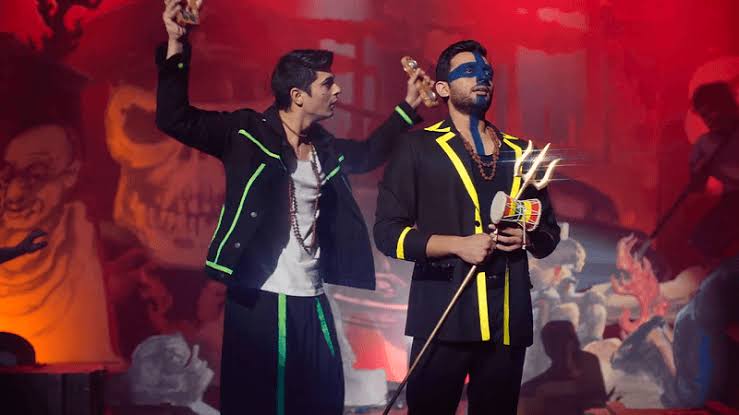
In the recent Amazon series Tandav, Mohammed Zeeshan Ayyub aka Shiva plays the role of Lord Shiva in a college play. He doesn’t match the traditional depiction of the Hindu God but looks stylish – wearing a suit, carrying a Treeshul in one hand, and smearing blue paint on his face and neck. Shiva talks about getting fewer followers on social media as compared to Lord Ram and what should he do to increase followers. Narad Muni (another mythological figure) advises him to tweet ‘something sensational’ to get more followers on Twitter and talk about how the students of the university are chanting ‘azaadi azaadi’ these days. During the conversation the Shiva uses offensive language. While the on-screen audience of the play bursts into roars of laughter.
https://youtu.be/Hyqd84h2dbU
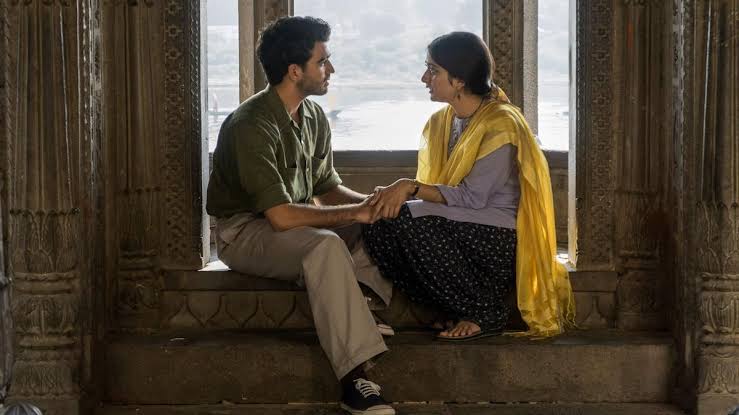
Like Amazon’s Tandav, Mira Nair’s A Suitable Boy on Netflix recently came under fire for hurting sentiments of Hindu by picturising a kissing scene inside the boundaries of a Temple.
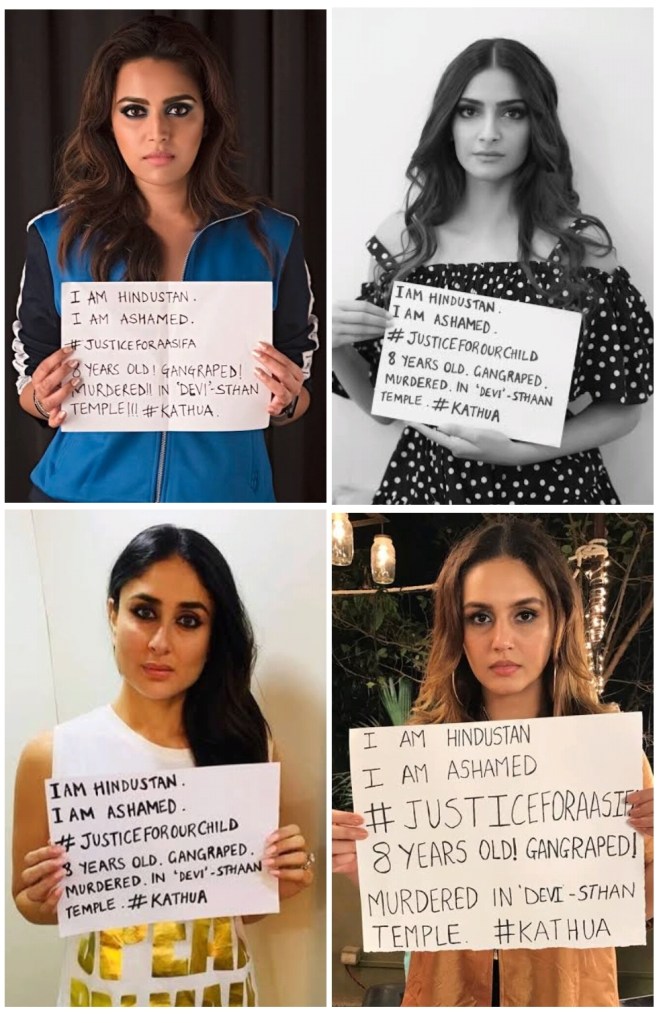
There are many Bollywood celebrities who speak against our country. Some celebrities just start their own movement on social media by holding placards. Kathua rape case was a very shameful act, but linking it with Hindu religion was more shameful. Rape should be criticized, but celebrities don’t really care about rape victims; instead they want to mock Hindus, that’s why the have used words like Hindustan, Devi-staan, Hindu temples on their placards.
“BOLLYWOOD KI EK BAAT SAMAJ NAHI AATI KI ‘MY NAME IS KHAN AND I’M NOT A TERRORIST HO SAKTA HAI’, TOH EK BEKAR HINDU KI WAJEH SE PURI COMMUNITY RAPIST KAISE HO SAKTI HAI“
But charges of ‘Hinduphobia’ have not been levelled against Bollywood/OTT stars alone. Stand-up comedian Munawar Faruqui had been incarcerated for jokes on Hindu deities that he was “going to” say in his act.
Bollywood celebrities, stand-up comedians and so called intellectuals spread propoganda through their movies and shows. BOLLYWOOD LOVES TO DEFAME AND MOCK HINDUS!
In the recent decades, stereotyping Hindus has increased even more.
Movies, songs, raps which mocks Hinduism. Please watch, you shouldn’t miss on this videos!
https://twitter.com/GemsOfBollywood/status/1388161017566269440?s=08
https://twitter.com/GemsOfBollywood/status/1397562772880199680?s=19
https://twitter.com/GemsOfBollywood/status/1396882976277860355?s=19
https://twitter.com/GemsOfBollywood/status/1394945616711622656?s=19
https://twitter.com/GemsOfBollywood/status/1390335300384157698?s=19
https://twitter.com/GemsOfBollywood/status/1398193687083970560?s=19
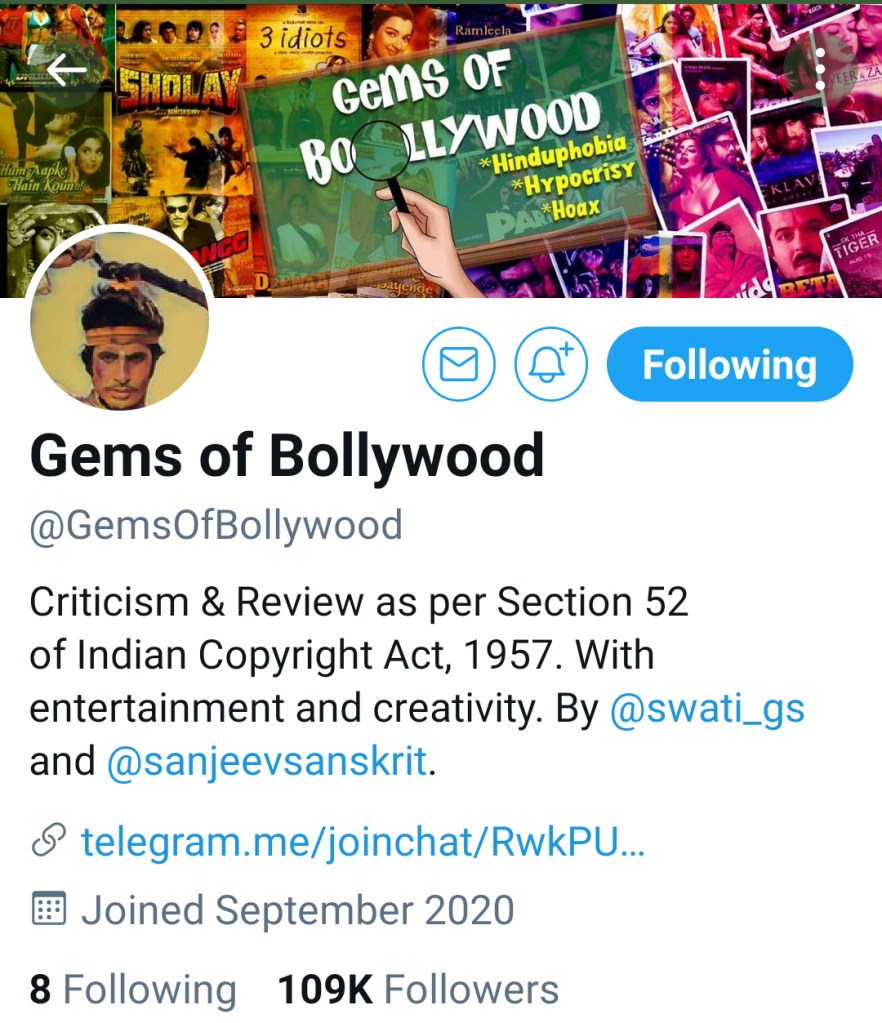
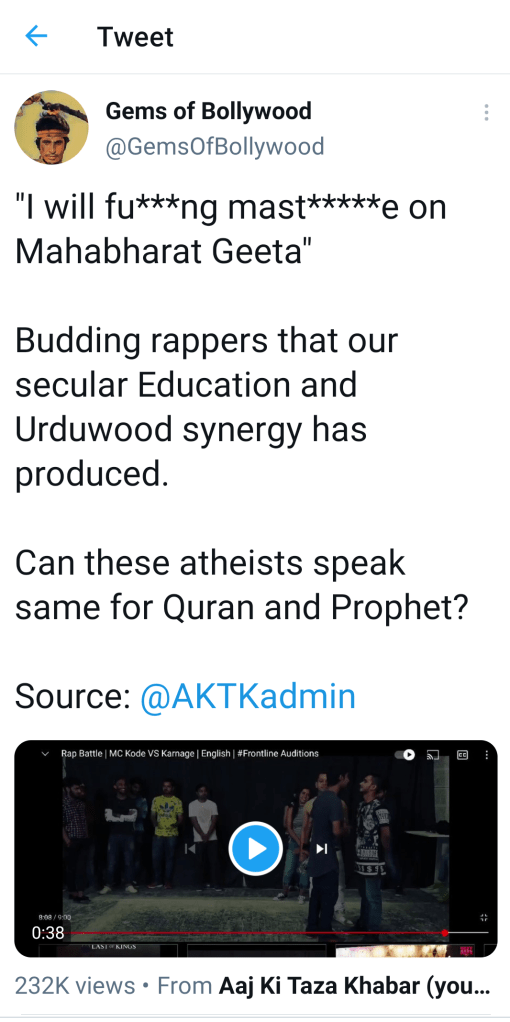
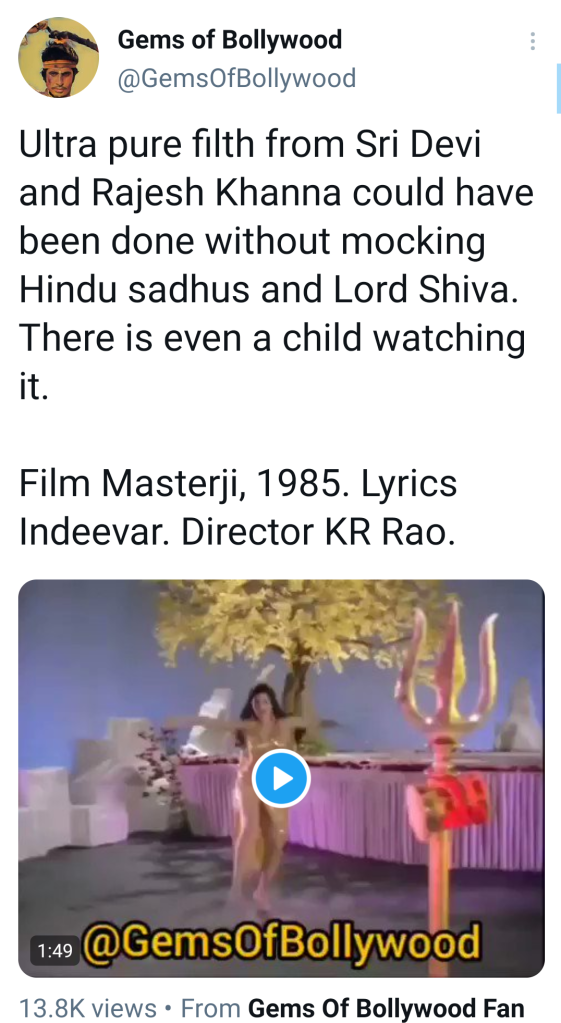
This page on twitter has explained in detail about all the Bollywood movies and songs which demean Hindus. It excerpts and annotates ‘Hinduphobic’ sequences from golden era Bollywood films as well as contemporary web content “to comprehensively bring out truth of Urduwood” — unmistakably a jibe at the secular workings of Bollywood, the unparalleled stardom of the three Khans, and the historical influence of Urdu writers in the film industry.
Here are some examples of how Bollywood movies and Indian web series defame Hindus. Must watch! https://youtu.be/xWInOP1T43o
https://youtu.be/TfOl-XNf4mM
If we talk about advertisements, Indian ads try to show two things in their ads, 1) Try to promote secularism and intercultural love and always show the Hindu as the ignorant one/bad guy. 2) Bad things happen during the Hindu festivals and noble things in Islamic festivals. Example: Holi festival ad (attached below)
There are many such examples of ads which showcases these two things,
1) Red label ad – In this festival, the Hindu man is shown to be prejudiced, whereas the Muslim man is shown to be religious and devoted.
https://youtu.be/wtKaeChWXUA
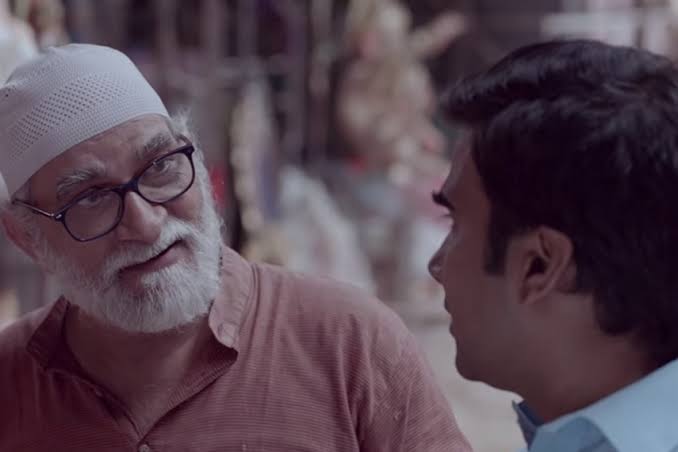
2) Ghadi detergent ad – If you look at the ads that are about Muslim festivals, the festivals are always peaceful, and the people celebrating these festivals are always innocent and religious/devoted
https://youtu.be/8Ol7O3ghAGI
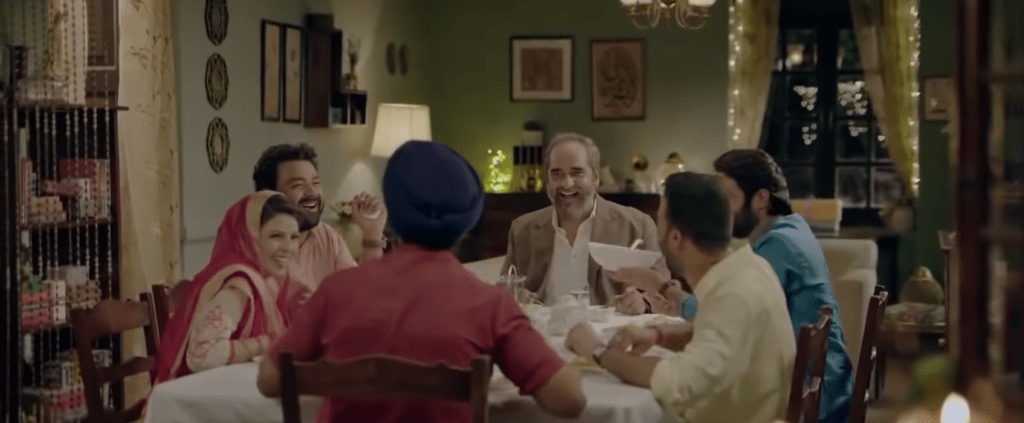
3) Ghadi detergent holi ad – Holi is always shown as an abusive festival, this ad shows that a boy finds an opportunity to abuse a girl under the tagline of “Bura na maano Holi hai”
Actually none has a problem with these ads, most of these ads have a good message. The problem begins when this message is directed towards only one community. When only one community is shown to be biased, and other communities can never do anything wrong.
In the below video link, the abusive feminist comedian Radhika Vaz abuses Hindu beliefs and faith. She performed nude on the stage and she hates Hindu festivals and wishes to put on Hijab and Burqa. Please WATCH!! https://twitter.com/Rajput_Ramesh/status/1283779632660008970?s=19
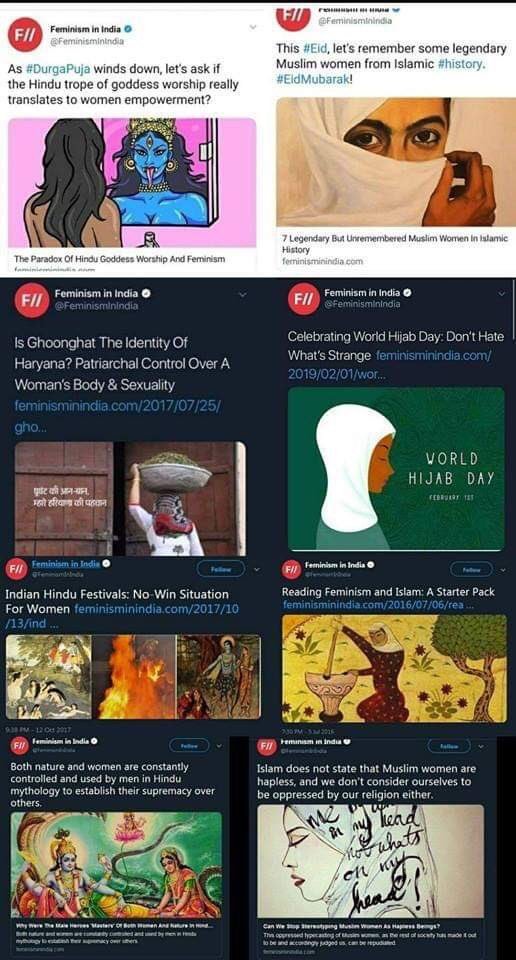
YOU JUST CANNOT KEEP TARGETING ONE INNOCENT COMMUNITY, JUST BECAUSE IT IS TOLERANT AND STAYS SILENT.
Thanks for reading!
 My Blog
I read your blog Pushti and found it to be an excellent and comprehensive read full of useful/helpful examples for those who are just starting out to understand #Hinduphobia in its various dimensions. The use of instances and examples from various creative industries such as films and ads was very well done. Visual sources were aptly used and enough reading links have been provided by you to the user for them to explore more about the subject. You have used the material provided to you very aptly. Well done! Perhaps you could add a more analytical and perceptive angle to your writing by explaining why Hinduphobia has been so persistent in media and why it is still being normalized. For the same, you will have to read more on the issue. Good use of visuals in the blog. Please translate this blog into Hindi/Gujarati for wider sensitization and awareness in the audience with regard to Hinduphobia.
https://www.indiafacts.org.in/
Please consider checking this resource repository on #Hinduphobia for scholarly, detailed and interesting perspectives on the subject.
LikeLike